Monday, March 31, 2025

Blog #7: Classification in Para Sports

Classification in Para Sports

What is Classification?

Classification describes the process of grouping people or things together based on their similarities. Although it may seem like a simple process in theory, it often requires highly skilled professionals to ensure classification is done ethically, responsibly, and legitimately. More specifically, in Para sports, classification is an essential step during the initial onboarding process of new Para athletes. 

According to Tweedy, S. (2014), "Classification has 4 stages: (1) establish whether the athlete has a health condition that will lead to one or more of the 8 eligible types of physical impairment, (2) determine whether the athlete has an eligible impairment type, (3) determine whether the impairment is severe enough, and (4) determine in what class the athlete should compete."

Should all Para-Athletes Undergo Classification?

Before determining whether or not every athlete should be required for classification in every sport, we must understand its purpose. Because there is a high diversity of disabilities that affect everyone differently, classification is necessary to ensure an even playing field in competitive sports. The International Paralympic Committee (IPC) determines eligibility based on ten categories of impairments consisting of eight physical, one vision, and one intellectual impairment. 

A video shared by Paralympics New Zealand further explains, "The classification process differs from sport to sport because classification is designed to be specific to the different movements in each sport." Because every disability and athlete differs, classifiers must assess their athletic strengths and weaknesses to ensure fair competition for all. Therefore, all disabilities and athletes should be properly classified before competing in sports. 

How is Fair Competition Promised and Maintained?

The specialized professionals behind classification, responsible for assessing all disabilities to create an even playing field are called classifiers. The Paralympics New Zealand on classification explains that "Classifiers have the welfare safety and fairness of Para athletes at front of mind during classification so that competition can be fair for all." 
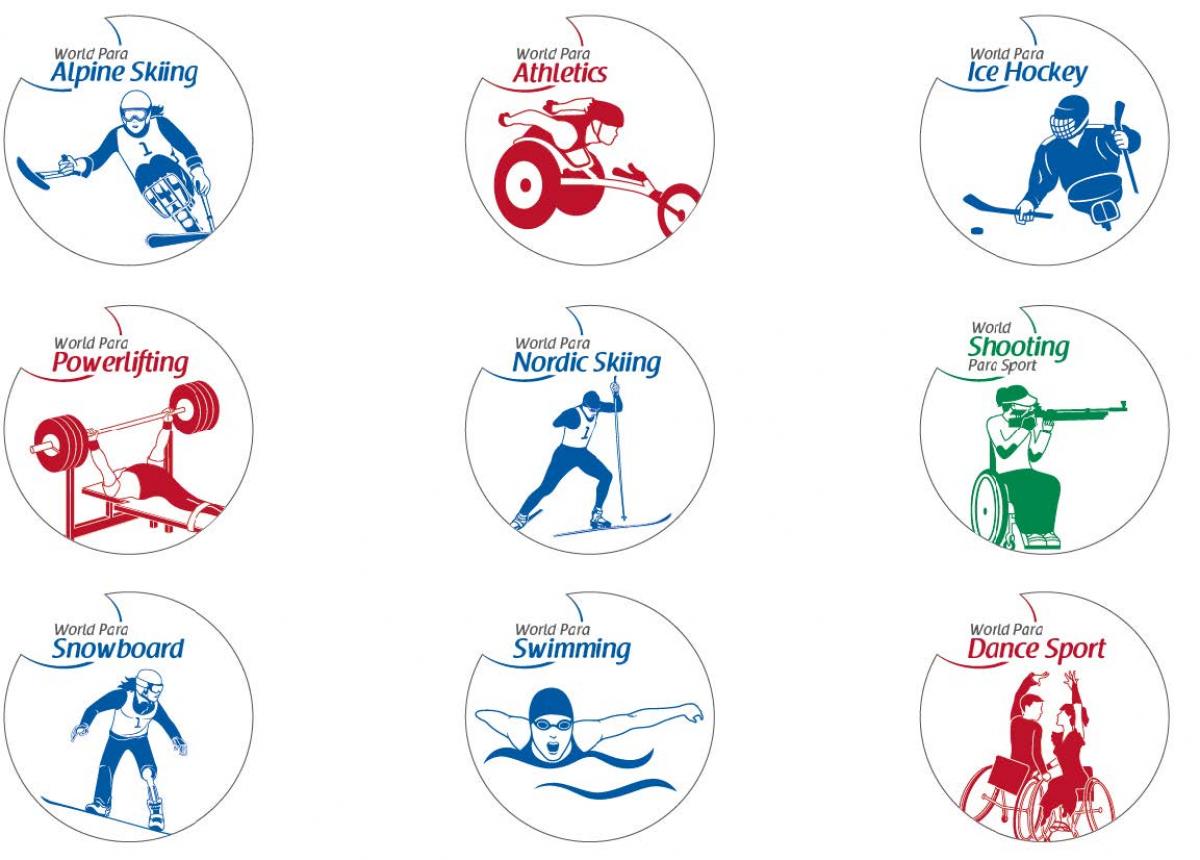
Image By IPC, paralympic.org
Because classifiers must consider all the different kinds of disabilities, they use the four classification stages to ensure consistent fairness among Para athletes. 

We could also refer to weight classes in wrestling as another form of classification. If one wrestler had more muscle mass than another, the lower-mass wrestler would be clearly disadvantageous. 

Should Paralympic Sports be Inclusive?

Inclusivity is a pillar of the Paralympics, allowing a diverse range of athletes to compete in sports best suited for them. However, there is a very good reason why classifiers must deem some athletes "ineligible" to compete. Determining whether or not an athlete is eligible is a delicate and complicated process. During the initial classification, a classifier may determine that an impairment is not severe enough, which could put the athlete at an unfair advantage. 

All Para athletes must also go through the reclassification process at some point in their career to ensure consistent fairness. The IPC explains, "Further evaluations may be required for a number of reasons, for example, Athletes with progressive or fluctuating Underlying Health Conditions. Or, if an International Federation makes changes to their sport’s Classification rules."

An interview with Para athlete Andre Brasil who competes in the S10 classification describes an emotional case of being ineligible. During this process, he scored a single point above the classification scale, deeming him ineligible. Andre shares, "How could the system treat someone like a liar, I gave my best and put my heart to living a life as a swimmer. I don't know if it's fair or not but I know that the system doesn't work for the sport." 

From a personal perspective, I believe that reclassification should offer flexibility in a case-by-case scenario rather than following a rigid numeric scale. Especially in Andre Brasil's case, who scored just one point above the S10 classification. 

References:

International Paralympic Committee. (n.d.). IPC Classification. https://www.paralympic.org/classification

International Paralympic Committee. (n.d.). Classification FAQs. https://www.paralympic.org/classification/faq 

Paralympics New Zealand. (2021, May 18). Classification evaluation process. [Video]. YouTube. https://youtu.be/7vrblJVCOQ0

SwimSwam. (2021, May 28). Andre Brasil Gives Raw and Emotional Commentary on Para Ineligibility. [Video]. YouTube. https://youtu.be/9vFrqCRNAWg

Tweedy, S. (2014). Paralympic Classification: Conceptual Basis, Current Methods, and Research Update. PM&R.

Friday, March 7, 2025

Blog #6: The Models of Disability

The Models of Disability


The Differences in Models of Disability:

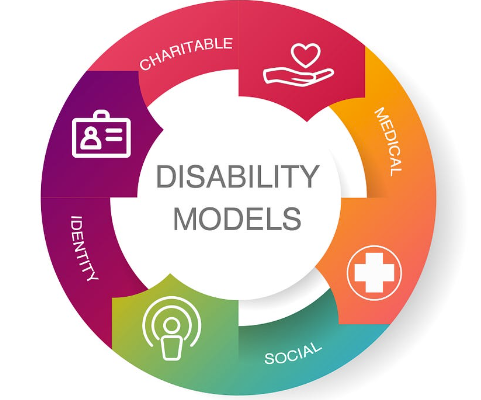
The term "disability" is widely recognized as broad, meaning one definition may better align with one person over the next. There is no-one-size-fits-all definition of disability, which is why we have developed models to better describe and apply its meaning. The primary models of disability commonly utilized are the medical, social, and biopsychosocial models.

Image by Gulen Yilmaz, Perficient.com
Medical Model of Disability:

More controversial than others, the medical model of disability, "defines disability as a medical problem that resides in the individual as a defect in or failure of a bodily system that is abnormal and pathological" (Goodley, 2016). Per this definition, we can understand why this approach to describing disability is problematic as it points blame directly to the individual. Words like "defect," "failure,” and "abnormal" can be damaging for someone categorized as such. It can directly affect someone's self-esteem and confidence, making them feel more detached and isolated from society.

Social Model of Disability:

As a direct contrast of the medical model of disability, the social model, "suggests that impairment be considered a form of diversity, like gender, sexual orientation, race, or ethnicity, that offers a unique perspective that should be valued and celebrated" (Goodley, 2016). Instead of blaming disability on the individual, it suggests society is the root cause of harming the individual. This model also has its downsides as it does not address the medical impacts of disability that are neither society's nor individuals' fault.

Biopsychosocial Model of Disability:

Each model of disability contains information that might better suit one party over another. By gathering the most beneficial elements of the medical and social model, we can refer to the biosocial model which combines the best of both sides. In a clinical setting, this model can serve providers for diagnosis and treatment, rather than direct blame of the person. From a societal standpoint, it is recognized that society may not always appropriately accommodate individuals with disabilities, but it is also not to blame. The biosocial model provides a broader approach to disability, teaching individuals to be more open about the unique complexities that differ from person to person.


Moving Forward:

Out of all the models described, the biopsychosocial model of disability serves as an effective foundation to educate others on understanding disability. It erases the stigma of viewing disability as a "defect" that needs to be "fixed" for living a better life. Evening out the playing field of society should always be an option for those with disabilities. However, lifestyle changes enforced to make the individual blend in with the rest of society are problematic and damaging. 

Society thrives on individuality and differences, which Aimee Mullins best describes in her TED Talk. Aimee further explains the meaning of educating, "to bring forth what is within, to bring out potential." Disabilities should be seen in a similar light, where we could celebrate our differences meaningfully. Through education, society can allow our differences to shine, enhancing everyone's true potential to make an impact.

References:

Hardin, R., & Pate, J. R. (2024). Introduction to Adaptive Sport and Recreation. Human Kinetics Publishers. https://bookshelf.vitalsource.com/books/9781718214545  


Monday, March 3, 2025

Blog #5: Assessing Fairness

 Assessing Fairness in Sports: Adaptive Technology

Adaptive Technology: Should it be Allowed?

Determining whether athletes should be allowed to compete in sports with adaptive technology has many underlying complexities and controversies. There are gray areas to assess and studies to reflect upon when addressing levels of advantages these technologies provide. Differences in what technology is designed to do in the Paralympics and the Olympics are additional factors to address.  

Attributes to Fairness: Want or Necessity?

Image by Miriam Bribiesca, people.com
Adaptive technologies such as running blades and racing wheelchairs are familiar assets used in the Paralympic games, allowing Para athletes to maximize their strengths. Scientific studies referenced in this video were conducted to determine if disabled athletes with running blades performed similarly or better than able-bodied athletes. It was concluded that the differences were negligible in terms of running performance. This supports the idea that athletes like Blake Leeper who require technology such as running blades, should be qualified to compete in able-bodied sports.

In the Olympics, we saw full body swimsuits fitted with polyurethane, which gave the swimmers an unfair advantage. The issue arises when adaptive technology is used as cheating tools to gain a competitive edge over other athletes. The Royal Institution shares a video featuring Professor Steve Haake. He discusses the issue of women’s swimsuits that arose, where polyurethane swimsuits allowed swimmers to swim more effectively. This use of adaptive technology was ultimately banned because it highlighted important differences. Improving performance through training is acceptable versus using technology to gain a competitive edge.

Disadvantaged Nation Accessibility:

Another viewpoint to consider is the accessibility of adaptive technology for disadvantaged nations. The latest and greatest renditions of adaptive technology come at a high cost, whether from limited suppliers, expensive materials, or shipping costs. A video by BBC demonstrates the manufacturing process and specialized tech involved in creating running blades. They are also uniquely fitted for every athlete's body, meaning no one size fits all for this specialized equipment. 

Another video shared by the Olympics explores the advanced technological capabilities of the racing wheelchair. This provides further evidence of the close relationship between technology and success. For example, if nation 1 had access to these latest racing wheelchairs competing against nation 2 using older technology, it would set nation 2 at a disadvantage. These factors are important to assess when ensuring equal opportunity for success for competing nations.

Conclusion:

As engineers develop and improve upon previous renditions of adaptive technology, athletic performance statistics also improve. The Paralympics is widely praised and recognized for providing an even playing field amongst Para athletes. Identifying the different uses of adaptive technology utilized in the Paralympics drives a strong indication of fairness. Adaptive technology such as running blades, which provide no competitive edge over other runners, should be allowed in able-bodied sports. This has been backed by scientific evidence through various simulations and studies. In contrast, using adaptive technology to give able-bodied athletes an unfair advantage over others should always be prohibited.

Blog #10: A Reflection of What I Learned

 Blog #10: A Reflection of What I Learned Prior vs. Current Knowledge: As a student majoring in Computer Information Systems, most of my cla...