Improving Disability Coverage in Media
Current State of Disabilities in Media
Throughout the history of American media, the portrayal of people with disabilities has often fallen into the three categories of villains, supercrips, or helpless. The issue that came alongside this is the damaging effects it has on society's views of disabled people, whether they are physically or mentally impaired per ADA definition. This has resulted in a form of marginalization, where disabled people in media such as shows or movies are rarely ever portrayed as people with realistic multi-dimensional defining identities. Although improvements have been made, thanks to organizations like GLAAD, there is still work to be done from a broader effort before we see more noticeable changes.
Increasing and Improving Media Coverage
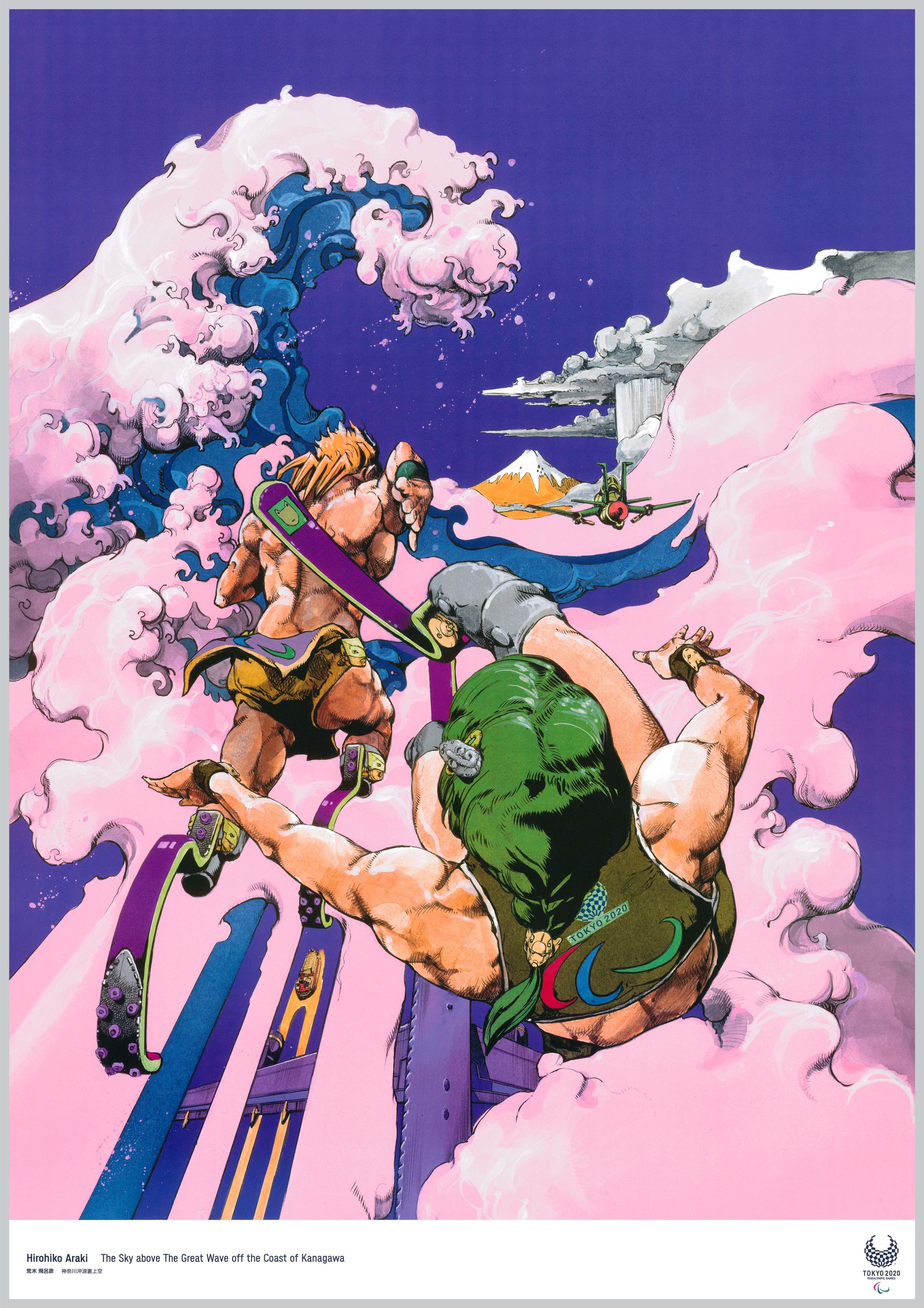 |
| Image by Hirohiko Araki, cnn.com |
Media coverage of the Paralympics and other disabled sports is often not nearly as covered as other sports and the Olympics. I learned that this limited coverage of the Paralympics in U.S. mainstream media has been non-existent until 2021. During that year, NBC covered the Paralympians who competed in the Tokyo 2020 Paralympics.
In this article, Joe Reedy shares, "NBC’s Olympics coverage has long been built on a foundation of human-interest stories and showcasing athletes’ road to the Games. The same philosophies will apply to the coverage of Paralympics, which will air on the network for the first time." However, despite the year's delay to ensure quality, authenticity, and proper representation, NBC's coverage of the 2020 Paralympians was still limited.
With the ever-expanding scope of media, reaching broad mainstream audiences has become easier due to how interconnected we are through social media platforms. Rather than focusing solely on increasing Paralympic coverage in the U.S. television media, streamlining coverage for social media could be the next step forward.
Referring to the Tokyo 2020 Paralympics, coverage on social media has been compared to reaching equivalent statistics as other non-Paralympic sports. Social media platforms like TikTok are accessible to a broader range of users, increasing Paralympic viewing metrics and awareness. Social media also provides the freedom to share a higher volume of proper representation of the Paralympians, potentially helping the U.S. shift away from common stereotypes.
Addressing the Stereotypes
Aside from limited coverage, the content usually features Parathletes in problematic categories to fit into predetermined stereotypes. We often see the common portrayal of Parathletes overcoming their disabilities, referred to as the "supercrip stereotype." Further explained in this article written by Erin Pearson, and Laura Misener, "Paralympians were heralded as “superheroes” because they were able to “overcome” their disabilities to participate in the Paralympic Games. The media often used the word “participate” and not “compete” when describing Paralympians." The other two stereotypes in media people with disabilities are often categorized into are "villains" and " being helpless."
To move past these stereotypical placements in all forms of media, we can refer to the Ford Foundation paper, Road Map for Inclusion for guidance. Within this paper, they provide a "what-if" assessment, showing what people with disabilities could do in all facets of media in the ideal world of inclusion. For example, "Disabled people comprise around 25 percent of the characters in media, representative of the one in four Americans who have a disability. Their roles take all forms, from a romantic lead to a dodgy drug dealer to a barista."
This is only one of the many ways we could normalize the representation of actors with disabilities in media. Their talents in acting would be placed first and foremost. Similar to how Paralympians should be celebrated for their perfected athletic abilities rather than "overcoming" their disabilities. The artwork created by Hirohiko Araki provides a perfect representation of this idea. This work emphasizes the Paralympian's incredible physique achieved through devoted training rather than focusing on their disabilities alone.